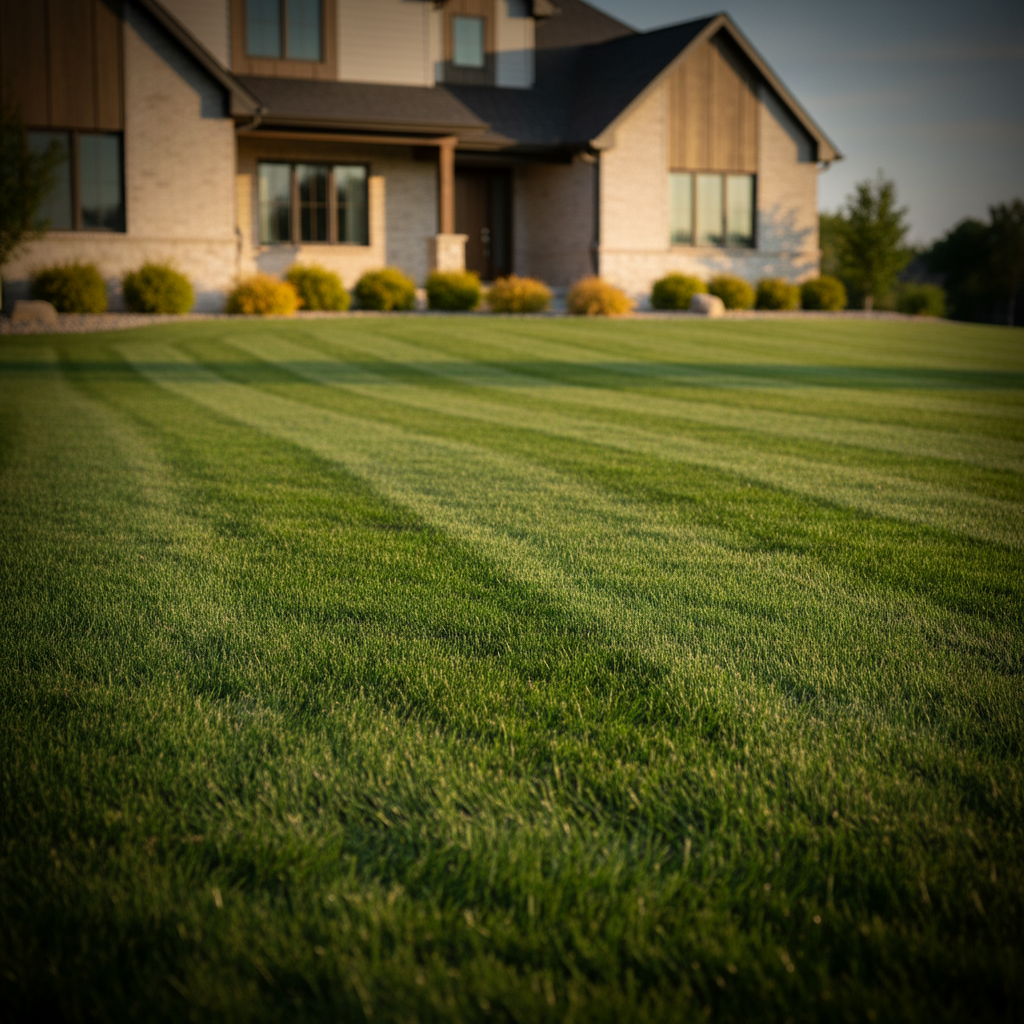
Why Choose Us

Lincoln's Trusted Lawn Care Provider

Baker's Lawncare delivers results season after season across southeast Lincoln, Hickman, Cheney, and surrounding communities.

5
Treatment Steps Per Season
500+
Lincoln Lawns Treated
98%
Customer Retention Rate
15+
Years Serving Lincoln

Our Process

Lincoln's Comprehensive 5-Step Fertilization & Weed Control

Every lawn in Lincoln faces the same battle — crabgrass in spring, dandelions in summer, and grub damage in fall. Our 5-step lawn care program addresses each threat at the right time, using products calibrated for Nebraska's clay-heavy soils and continental climate. Here is exactly what your lawn gets at each stage.

Baker's Lawncare technician applying spring pre-emergent treatment to a Lincoln residential lawn

Each step builds on the last. Skip one and you leave a gap that weeds exploit. That is why most of our Lincoln customers choose the full 5-step program — it is the most cost-effective way to maintain a thick, green lawn from March through November.

Get Your Custom Program Quote

Step 01 — Early Spring

Pre-Emergent & Nutrient Boost

Applied before soil temps hit 55°F, this treatment creates a barrier against crabgrass germination while delivering a balanced nitrogen-phosphorus boost to wake your lawn up after winter dormancy. Timing is everything — we monitor Lincoln soil temperatures weekly.
Step 02 — Late Spring

Broadleaf Weed Control

Dandelions, clover, and creeping Charlie are actively growing and most vulnerable in late spring. We apply targeted broadleaf herbicides that eliminate existing weeds without stressing your turf. This is the treatment that makes the biggest visible difference.

Step 03 — Summer

Slow-Release Feeding

Nebraska summers push lawns hard. Our slow-release fertilizer feeds your turf steadily through June and July heat without causing a flush of growth that stresses roots. This keeps your lawn green when your neighbors' yards are going dormant.

Step 04 — Late Summer/Fall

Recovery & Grub Prevention

Fall is recovery season. We apply nutrients that repair summer stress and a preventative grub treatment to stop Japanese beetle larvae from destroying your turf. Southeast Lincoln is a high-risk zone for grubs — skipping this step is the most common mistake we see.

Step 05 — Winterizer

Root Strength & Early Green-Up

The final application is a high-potassium winterizer that strengthens root systems before the ground freezes. This is what gives your lawn a head start in spring — lawns that get a winterizer green up two to three weeks earlier than untreated turf. It is the step most DIYers skip, and the one that makes the biggest difference come March.

Specialty Treatments

Targeted Grub Control and Organic Options

Not every lawn needs the same thing. Some Lincoln properties face severe grub pressure. Others have families who want zero synthetic chemicals on their yard. We offer targeted solutions for both — no cookie-cutter approach.

Grub Prevention

Stop Damage Before It Starts

Preventative grub treatments applied in late summer create a barrier in the soil that kills larvae before they can feed on roots. One treatment protects your lawn for the entire season. Far cheaper than re-sodding — and we see grub damage every fall in the Hickman, Walton, and south Lincoln corridors.

Eco-Friendly Programs

Organic Fertilization Options

Our organic lawn fertilizer programs use natural nutrient sources — bone meal, composted materials, and bio-stimulants — that feed your soil ecosystem rather than just the grass. Safe for pets, children, and waterways. Ideal for Lincoln families near Holmes Lake, Wilderness Park, and other environmentally sensitive areas.

Soil Analysis

Custom pH & Nutrient Testing

Lincoln soil varies dramatically — heavy clay in south Lincoln, sandier near Salt Creek, and alkaline conditions throughout most of Lancaster County. We pull soil samples and test for pH, nitrogen, phosphorus, potassium, and organic matter. Your program is then adjusted based on what your specific lawn actually needs, not a one-size-fits-all formula.

Close-up of healthy Lincoln lawn after grub treatment and organic fertilization
Available Now

Ready for a Lawn That Stands Out on Your Block?

Most Lincoln homeowners see visible results after the first two treatments. Get a custom quote based on your lot size — no commitment, no pressure.

Free Estimates
Same Day Service
Licensed & Insured

Local Conditions

Why Lincoln Lawns Need a Professional Program

Lincoln sits in USDA Hardiness Zone 5b, where lawns endure temperature swings from negative 10°F in January to over 100°F in July. That 110-degree range puts enormous stress on cool-season turf grasses, and it is the reason a structured fertilization and weed control program outperforms ad-hoc treatments every time.

The soil across southeast Lincoln and Lancaster County is predominantly clay-based with a pH that runs alkaline — typically between 7.0 and 7.8. That alkaline condition locks up iron and manganese, which is why so many Lincoln lawns develop yellow patches even when they are getting adequate nitrogen. A professional soil test identifies these deficiencies so we can correct them with targeted micro-nutrient applications, not just more fertilizer.

Weed pressure in Lincoln is relentless. Crabgrass germinates as soon as soil temperatures reach 55°F in late March, and a single plant can produce 150,000 seeds by fall. Dandelions, clover, and creeping Charlie fill in any thin spots left by winter damage. Without a pre-emergent barrier followed by targeted post-emergent treatments, weeds will outcompete your turf by midsummer. Our program addresses each weed type at the stage when it is most vulnerable — not on a generic national calendar, but based on actual Lincoln soil temperatures and growing degree days.

Grub infestations are a growing concern in the Lincoln metro. Japanese beetle and masked chafer grubs feed on grass roots from August through October, and a heavy infestation can destroy an entire lawn in a single season. Properties near Wilderness Park, Pioneers Park, and the neighborhoods south of Highway 2 see the highest grub pressure. Preventative treatment in late summer is the most cost-effective defense — it costs a fraction of what re-sodding or reseeding a grub-damaged yard would require.

Common Lincoln Lawn Issues We Treat

  • Crabgrass invasion — Pre-emergent timing is critical in Lincoln's variable springs. A week late and you miss the window entirely.

  • Iron chlorosis — Yellowing caused by high-pH clay soils, especially in south Lincoln neighborhoods near Pine Lake and Yankee Hill.

  • Summer dormancy — Without slow-release feeding, Kentucky Bluegrass goes brown by mid-July while properly treated lawns stay green.

  • Grub damage — Spongy turf that peels back like carpet in early fall. Most common in Walton, Hickman, and south Lincoln corridors.

  • Creeping Charlie — Aggressive ground ivy that chokes out turf. Requires targeted post-emergent applications during active growth phases.

DIY vs. Professional Program

Many Lincoln homeowners start with big-box store fertilizer bags and a broadcast spreader. The products are fine, but timing is everything. Apply pre-emergent two weeks late and crabgrass breaks through. Use the wrong nitrogen ratio in summer and you burn your lawn during a heat wave. Our program removes the guesswork — we monitor conditions, calibrate products, and apply at the right time so you get results without the trial and error.

Why Baker's Lawncare

Lincoln Lawn Care Built on Owner Accountability

When you call Baker's Lawncare, you talk to the person who manages your lawn. No call centers, no runaround. We have been treating lawns across southeast Lincoln, Cheney, Hickman, and Walton for over 15 years — and we still answer every call and text personally.

Direct Communication

Owner-Operated Service

You get direct access to the person responsible for your lawn. Questions after a treatment? Text us. Need to adjust your schedule? One message and it is done. No ticket systems, no waiting on hold.

Local Expertise

Southeast Lincoln Specialists

We know the soil conditions in every Lincoln neighborhood — from the heavy clay near Pine Lake to the sandy patches around Saltillo. Our treatment plans are adjusted by zone, not guessed from a national formula.

Simple Billing

Digital Estimates & Recurring Pay

Get your quote digitally, approve it from your phone, and set up automatic payments. After each visit you get a notification with treatment details. No paper invoices, no surprises on your bill.

Proven Results

98% Customer Retention

Our customers stay because the program works. Most see thicker turf and fewer weeds within two treatment cycles. We stand behind every application — if you are not happy, we will re-treat at no charge.

Flexible Programs

Custom to Your Lawn's Needs

Not every lawn needs the same program. We offer organic options, add-on aeration and overseeding, and targeted grub control. Your program is built around your lawn, your budget, and your preferences.

Service Area

Southeast Lincoln & Beyond

We serve Lincoln, Cheney, Hickman, Walton, Bennett, and Saltillo. Whether you are south of Highway 34 or in the heart of Lincoln, our crews are nearby and ready to keep your lawn on schedule.

FAQ

Lawn Care Program Questions

Common questions from Lincoln homeowners about our fertilization, weed control, and grub prevention programs.

How much does a lawn care program cost in Lincoln, NE?

Our lawn care programs in Lincoln start at $60 per application, priced by square footage in 1,000 sq ft increments. Most residential yards in southeast Lincoln fall between $60 and $120 per visit. We offer recurring billing discounts when you sign up for the full 5-step program — you will save roughly 10% compared to individual treatments. Every quote is based on your actual lot size, so there are no surprises.

What is the best lawn treatment service for Lincoln's climate?

Lincoln's climate demands a program built around cool-season grasses like Kentucky Bluegrass and Tall Fescue. Our 5-step lawn care program is timed to Nebraska's growing season — pre-emergent in early spring, broadleaf control in late spring, slow-release feeding through summer, fall recovery nutrients, and a winterizer to lock in root strength. This approach keeps your lawn healthy through 95-degree July heat and sub-zero January freezes alike.

When should I apply crabgrass control in Nebraska?

In Lincoln and southeast Nebraska, the ideal window for crabgrass pre-emergent is late March through mid-April — before soil temperatures consistently hit 55°F. That is Step 1 in our program. We monitor local soil temps so your application lands in the right window. If you are already seeing crabgrass, we can apply a post-emergent treatment, but prevention is always more effective and less expensive.

Are your lawn care chemicals safe for pets?

Yes. All products we use are safe for pets and children once the application has dried, which typically takes 1-2 hours. We also offer fully organic lawn fertilizer options for families who prefer an eco-friendly approach. After every treatment, we send a notification so you know exactly when it is safe to let pets back on the lawn.

Do I need grub control every year?

We strongly recommend annual preventative grub control for lawns in southeast Nebraska. Japanese beetle and masked chafer grubs are common in the Lincoln area, and a single season without treatment can lead to thousands of dollars in turf damage. Preventative grub treatment in late summer costs a fraction of what sodding or reseeding a destroyed lawn would run.

How do I sign up for recurring billing?

Signing up is simple. We have a mobile-first digital portal where you can review your service schedule, approve quotes, and set up automatic payments. After each service visit, your card is charged automatically — no paper invoices, no checks to mail. You can manage everything from your phone in under two minutes.

Will these programs get rid of creeping Charlie?

Creeping Charlie (ground ivy) is one of the toughest broadleaf weeds in Lincoln lawns, but our program targets it directly. We use specific post-emergent herbicides during our broadleaf weed control phases in late spring and fall when creeping Charlie is most vulnerable. Most lawns see significant reduction after two treatment cycles, with ongoing control built into your recurring program.

Do you offer organic fertilizer in Lincoln?

Absolutely. We offer sustainable, eco-friendly lawn fertilization programs for Lincoln homeowners who want to minimize chemical use. Our organic options use natural nutrient sources that feed your soil biology over time, building long-term turf health. Just let us know when you request your quote and we will tailor the program to your preference.

Still have questions?

We're here to help you find the answers.

Contact Us

Serving Lincoln & Southeast Nebraska

Conveniently located for Lincoln customers

Address

6112 NW 10th St.

Lincoln, NE 68521

Get Directions

Hours

Monday - Friday: 9am - 6pm

Saturday: 9am - 5pm

Sunday: Closed

Contact

(402) 499-3995

Call or text for appointments

Request a Quote
Available Now

Start Your 5-Step Lawn Care Program Today

Join hundreds of Lincoln homeowners who have switched to a professional fertilization and weed control program. Get a quote in under two minutes.

Free Estimates
Same Day Service
Licensed & Insured